Friday, April 15, 2022

Review of Charlie and the Great Glass Elevator by Roald Dahl

This review was written by Eugene Kernes

Book can be found in:
Genre = Novel, Science
Book Club Event = Book List (06/04/2022)
Watch the Review

Excerpts

“Only Charlie and Grandpa Joe kept moderately cool.  They had traveled a long way with Mr. Wonka and had grown accustomed to surprises.  But as the Great Elevator continued to streak upward, farther and farther away from the earth, even Charlie began to feel a trifle nervous.” – Roald Dahl, Chapter 1: Mr. Wonka Goes Too Far, Page 12


“”I must admit,” said Mr. Wonka, “that for the first time in my life I find myself at a bit of a loss.”” – Roald Dahl, Chapter 11: The Battle of the Knids, Page 63


“”I have never met a man,” said Grandma Georgina, “who talks so much absolute nonsense!” 

“A little nonsense now and then, is relished by the wisest men,” Mr. Wonka said.” – Roald Dahl, Chapter 12: Back to the Chocolate Factory, Page 67


Review

Overview:

After Charlie had won the Chocolate Factory, and Willy Wonka picked up the rest of the Bucket family in a Glass Elevator, they went flying back to the Chocolate Factory.  But they needed speed to break through the factory, and so flew higher and higher.  Ended up breaking the gravitational pull of the Earth, and getting stuck in space.  But fortunately, there was a space hotel there.  Willy Wonka was out of Wonka’s element, but like usual, knew so much, and had inadvertently prepared for many of the trials in the adventure.  A space hotel was not the only visit, as Charlie and Willy Wonka also needed to go to Minusland, to rescue Grandma Georgina.  Throughout the adventures, Charlie and Grandpa Joe had kept their cool, as they were used to Willy Wonka’s eccentricities.  

The book tries to encourage the understanding of values, of what is more important.  That greed usually gets in the way of good decisions that help everyone.  And that instructions are there for a reason, and should be adhered to.  


Caveats?

A fast past and short short.  The creativity of the story sometimes gets ahead of its consistency.  


Questions to Consider while Reading the Book

•What is the raison d’etre of the book?  For what purpose did the author write the book?
•What are some limitations of the book?
•How and why did the group end up in space?
•What was in the space hotel?
•What is Minusland?
•What fantastic inventions of Willy Wonka were revealed in did story?
•How does Wonka handle arguments?
•Is the group going to meet the President of the U.S.A.?  What was preventing the visit? 
•What does greed lead to? 


Book Details
Edition ISBN:  9781101652961
Pages to read:   104
Publication:     2007
1st Edition:      1972
Format:            eBook

Ratings out of 5:
Readability    5
Content          2
Overall           3


Monday, April 11, 2022

Review of A Tree Grows in Brooklyn by Betty Smith

This book review was written by Eugene Kernes

Book can be found in:
Genre = Novel, History
Book Club Event = Book List

Watch Short Review

Excerpts

“The tree knew.  It came there first.  Afterwards, poor foreigners seeped in and the quit old brownstone houses were hacked up into flats, feather beds were pushed out on the window sills to air and the Tree of Heaven flourished.  That was the kind of tree it was.  It liked poor people.” – Betty Smith, Chapter 1, Page 1


“A smile would have meant a lot to Francie and a friendly comment would have made her so happy.  She loved the library and was anxious to worship the lady in charge.  But the librarian had other things on her mind.  She hated children anyhow.” – Betty Smith, Chapter 2, Page 32


“The neighborhood stores are an important part of a city child’s life.  They are his contact with the supplies that keep life going; they hold the beauty that his soul longs for; they hold the unattainable that he can only dream and wish for” – Betty Smith, Chapter 16, Page 136


Review

Overview:

Trees grow in neglected areas, tenement districts.  The trees come first, then poor foreigners follow.  A tree that likes poor people.  The poor and those who have money have different views of each other.  Different views about why people are in poverty.  This book highlights the misunderstandings of assumptions about those within different social classes.  A secret to success within this book, to get out of poverty, is the ability to read.  Getting as much education as possible.  


Francie grows up poor, but has relatives that desire success.  They work very hard not only to survive, but get ahead.  This is a story of how Francie grows up.  A story of how Francie’s mind changes about various ideas, and how Francie impacts those who interact with Francie.  With a love of books and an incessant need to improve upon ideas. 


The poor in this book are described as those who struggle to survive, and get ahead.  Working hard to kept what they have.  A dislike of charity, and the humiliation that it brings with it.  A want to not feel the need to save as much as possible of everything.   


There is a clash between hope and effort.  Not just between the characters, but the reason for immigrating.  The purpose of coming to America was that it was supposedly a place of hope.  Where circumstances could be improved.  With those improvements come over the generations.  Slowey but surely trying to help the next generation achieve more than they and their predecessors had.  


Education, specifically reading, being one of the skills that are impressed as a need for social advancement.  The library having a lot of importance, given that it provides access to books.  With help from Katie’s mother, Katie used the information to instill a want to read in Katie’s daughter Francie.  Growing up, Francie was exposed to a lot of books, and loved to read books. 


School is another important source of knowledge.  But not all schools want to educate the children.  With very mean children.  Francie still appreciated school in spite of the cruelties.  The cruelties made Francie really appreciate the next school, and a willing to walk a lot to the better school.


Whenever Francie saw ideas that could be improved upon, the future that Francie saw for Francie changed.  Wanting to be an integral part of the reason for the improvement.  An incessant need to improve ideas.  


Francie became liable to lie.  Although given somewhat poor ideas on the delineation between lying and a story, advice was given for Francie to write the truth.  Francie found an outlet in writing, in order to keep a dividing line between truth and fiction.  A discrepancy between what is true and what is beautiful, between the real misery and the hope.  


Caveats?

The book can be a bit difficult to read, with poor flow.  The historical context and situations have changed.  Many of the interactions and events lack emotional appeal, but their representation makes them more realistic.  


Questions to Consider while Reading the Book

•What is the raison d’etre of the book?  For what purpose did the author write the book?
•What are some limitations of the book?
•Why do trees grow in Brooklyn? 
•What is Francie’s characteristics?
•Who are the people around Francie?  How does do they help/hinder Francie?  How does Francie view them? 
•What are Katie Nolan’s characteristics?
•What social dynamics are exhibited?
•Is the book representative of the place and era?
•What are some social class assumptions?
•What is the purpose of an education?
•What role does the library have in society?
•How was religion used?
•How did the political parties behave themselves? 
•Why did foreigners come to America? 
•Why is reading the secret to success? 
•What are the social conditions of women during the era? 
•How were Francie’s school days? 
•What is the difference between a lie and a story? 

Book Details
Edition ISBN:  9780061803024
Pages to read:   453
Publication:     2009
1st Edition:      1943
Format:            eBook

Ratings out of 5:
Readability    3
Content          3
Overall           3


Friday, April 8, 2022

Review of The Perdiccas Years, 323–320 BC: Alexander's Successors at War by Tristan Hughes

This book review is written by Eugene Kernes

Book can be found in:
Genre = History, Empires
Watch Short Review

Review

Overview:

Battles for power started immediately after Alexander the Great’s death.  Internal strife started small and was managed.  But incidents kept escalating the problems until further battles, and then war for succession.  A Macedonian civil war.  Even during the battles, the soldiers had remorse in attacking other Macedonian troops and leaders.  For they had been fighting with them during previous battles.  This is a story of what happened after Alexander the Great died in Babylon.  

Alexander the Great might have built the empire, but it was the successors that determined its fate.  Legend has that shortly before death, Alexander the Great replied that succession should go to the strongest.  The problem was that there were many who had proven themselves.  But before death, Alexander the Great provided a symbolic gesture of whom should lead in the interim.  To manage state affairs until an appropriate successor was found.  Alexander the Great’s gave the signet ring to Perdiccas.  

Among those most proven and highest-ranking individuals of Alexander the Great’s empire were seven bodyguards.  Those who had proven themselves countless times on the battlefield.  But it was not just the bodyguard who laid claim to the throne, as there was Alexander the Great’s unborn child, another illegitimate child, and close relatives.  Whoever would claim the throne, would require a regency or a shift in power.  Even alternative methods of rule were considered, such as a committee to rule the empire rather than a monarchy.

The monarchy needed legitimacy, making the kingship a death warrant to those without.  Legitimacy required the support of nobility, soldiers, and external allies.  Without them, conflict would arise.  Perdiccas was very skillful in becoming the regent and gaining de facto control.  Turned to solidifying power and pursuing ambition.

Many of the cities and states conquered by or allied with Alexander the Great, had a very tenuous relation with Macedonia.  As Alexander the Great’s armies moved further away, the cities did not have much oversight from Macedonian and behaved independently.  But trying to maintain good relations with Alexander the Great, and the successors.  After the death of Alexander the Great, it was very hard for them to accept Macedonian rule.  More and more were becoming anti-Macedonian, and wanted full independence.  


Caveats?

Unless you are interested in the history of warfare, there will be times of poor writing flow.  There is a lot of background information that had caused forthcoming events, but it can still be hard to understand many of the decisions and events.  The decisions taken appear to be very calculating, without much cultural influence.  


Questions to Consider while Reading the Book

•What is the raison d’etre of the book?  For what purpose did the author write the book?
•What are some limitations of the book?
•Who was Alexander the Great?
•Who was Perdiccas?
•What is the importance of the Alexander the Great’s bodyguard?
•Who had claim to Alexander the Great’s throne?
•Why was there no clear successor?
•Why did the friction escalate to a civil war?
•How did the Macedonian people, cities, and states react to the death of Alexander the Great?

Book Details
This book was provided by NetGalley
Edition ISBN:  9781526775115
Pages to read:   341
Publication:     2022
1st Edition:      2022
Format:           eBook

Ratings out of 5:
Readability    4
Content          4
Overall           4


Monday, April 4, 2022

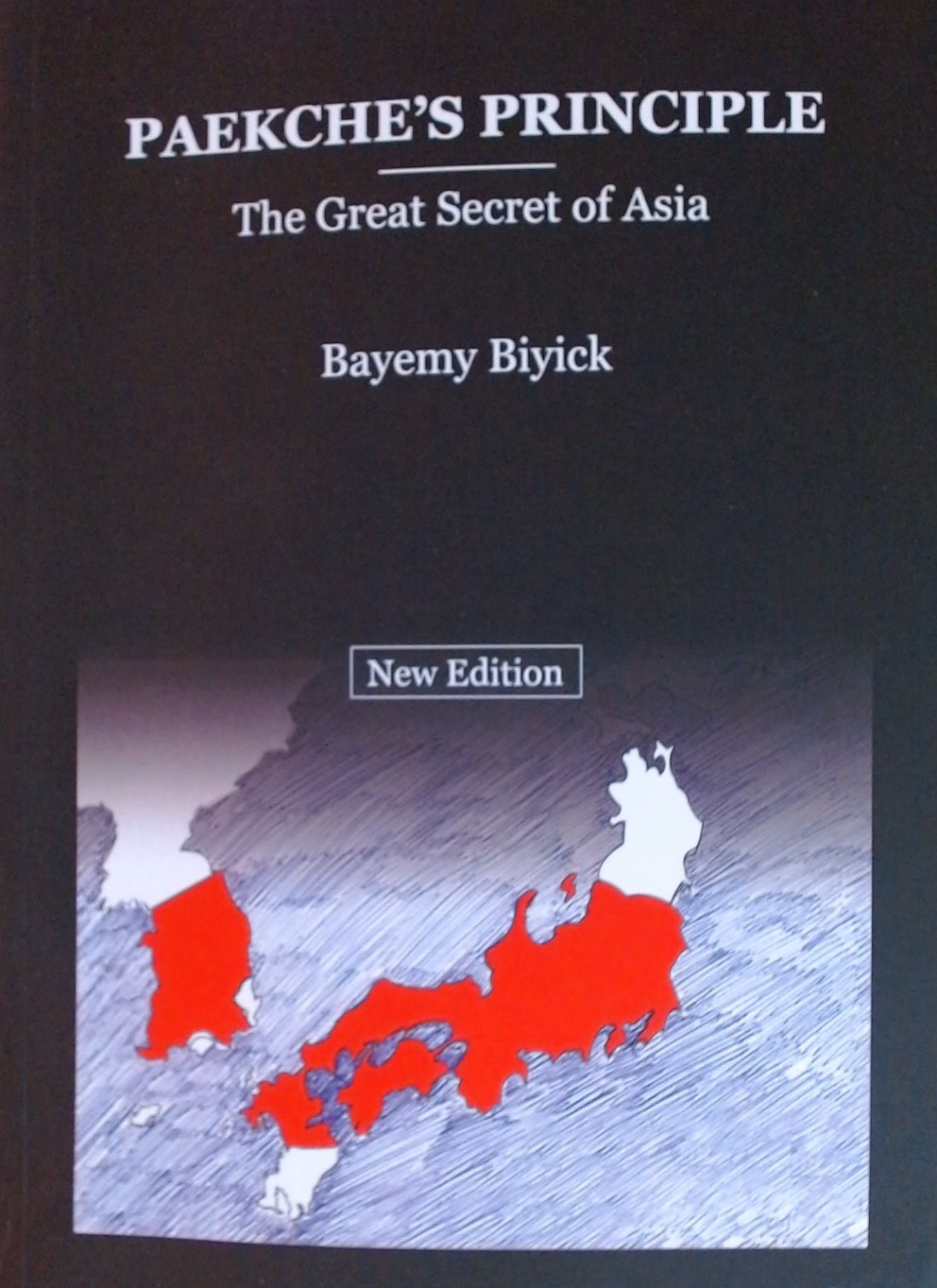
Review of Paekche's Principle: The Great Secret Of Asia by Bayemy Biyik

This book review is written by Eugene Kernes

Book can be found in:
Genre = History, Empires


Excerpts

“This systematic rewriting of historical facts is the dark side, the second part of a political, military and ideological conquest.” – Bayemy Biyick, Page 11


“These founding myths are a good substitute for the existence of the Black-Asian kingdoms that were subject to genocides.  Once the population are massacred and their traces erased, all that remains is to occupy the symbolic space of these territories.” – Bayemy Biyick, Page 13


“This quota is in line with the strict political control of knowledge, popular culture, and freeze on development of basic sciences and their practical applications.” – Bayemy Biyick, Page 40


Watch Review

Review

Overview:

During the 4th-7th Century C.E., the Paekche state, or Kudra in Japanese, controlled territories of South Korea and Japan.  Paekche was a culture and industrial power rather than a military power.  A more egalitarian society whose spirituality rivaled many others. Knowledge so advanced that other nations wanted to rapidly translate their work.  The problem is that much of the sources about the Paekche have been purposefully falsified and manipulated.  After Paekche has been conquered politically, militarily, and ideologically, their historical facts have been systematically rewritten.  Many countries have founding mythology rather than then reveal the actual history of Black-Asian kingdoms subject to genocide.  After the people were removed, the territories were available for occupation.  Followed by a political control of knowledge.  The purpose of this book is to raise questions about the Paekche state, and show the discrepancies in the historic sources that came after Paekche State. 


Caveats?

The problem with the book is the central theme of the book, sources.  As the sources have been removed or manipulated, it does not leave much sources and details to work with.  Other sources in the book are circumstantial.  There is a need for more details to have a proper understanding of the Paekche state.  Which is exactly what this book does, raises inquiry on the Paekche state, to start looking and getting those details.  


Questions to Consider while Reading the Book

•What is the raison d’etre of the book?  For what purpose did the author write the book?
•What are some limitations of the book?
•What is the Paekche Principle?
•Where was the Paekche state?
•Who were antagonistic to Paekche?
•When and how was Paekche defeated?
•How and why was Paekche history removed or manipulated?
•What Paekche cultural features did other nations embody?

Book Details
This book was provided by promoter for book review
Edition ISBN:  9782956069645
Pages to read:   133
Publication:     2022
1st Edition:      2014
Format:           Paperback

Ratings out of 5:
Readability    4
Content          3
Overall           3

Friday, April 1, 2022

Review of The Evolution of Physics: From Early Concepts to Relativity and Quanta by Albert Einstein, Leopold Infeld

This review was written by Eugene Kernes

Book can be found in:
Genre = Science
Intriguing Connections = What Makes Science A Science?

Excerpts

“Einstein thought that quantum mechanics was somehow an “incomplete” theory of reality, because it did not provide a strictly causal and deterministic description of nature and instead as founded on uncertainties and chance.” – Walter Isaacson, Foreword, Page xix


“Some of the riddles of nature have been solved although many of the solutions have proved temporary and superficial in the light of further research.” – Albert Einstein, and Leopold Infield, Chapter1: The Rise of the Mechanical View, Page 5


“The formulation of a problem is often more essential than its solution, which may be merely a matter of mathematical or experimental skill.  The raise new questions, new possibilities, to regard old problems from a new angle, requires creative imagination and marks real advance in science.” – Albert Einstein, and Leopold Infield, Chapter 2: The Decline of the Mechanical View, Page 92

Watch Review


Elaborate Description

Overview:

This book traverses the history of physics from the rise and fall of the mechanical view, to relativity, and the beginnings of quantum mechanics.  Einstein favored realism in science, which made Einstein antagonistic to quantum mechanics because it appeared incomplete, as it did not provide strict causal and deterministic descriptions but those of uncertainties and chance.  Throughout the book, are references on what beliefs about what physics and science should be and are.  Science depends on inquiring on problems, with the solutions being a matter of mathematical or experimental skill.  Science evolves by being challenged from different perspectives, and solutions are often temporary, awaiting further research that find its problems.  New theories arise when with serious and deep contradiction of previous views that could not be overcome.  New theories overcome as many possible problems of previous views, while trying to explain the ideas as simply as possible.  


Caveats?

The book is meant for a general audience, but it does not fulfill its purpose.  The ideas start simple, and progressively become more and more complicated.  For someone who does not have a background in many of the ideas, it can become too complicated too quickly.  


Questions to Consider while Reading the Book

•What is the raison d’etre of the book?  For what purpose did the author write the book?
•What are some limitations of the book?
•How does science evolve?
•What does Einstein believe is needed for physics views to become acceptable? 
•How and why did physics change its views?
•What was the mechanical perspective, and what problems did it have?
•What led to the general relativity theory?
•How does quantum mechanics work?
•What experiments were used to prove and disprove the ideas? 

Book Details

Edition ISBN:  9780671201562
Pages to read:   315
Publication:     2007
1st Edition:      1938
Format:            Paperback

Ratings out of 5:
Readability    2
Content          2
Overall           2